
Introduction
For decades, industrial piping, structural profiles, and equipment components have relied on traditional materials—cast iron, galvanized steel, copper, and concrete. These materials have served their purpose, but they come with significant drawbacks: corrosion, heavy weight, high maintenance costs, and limited lifespan.
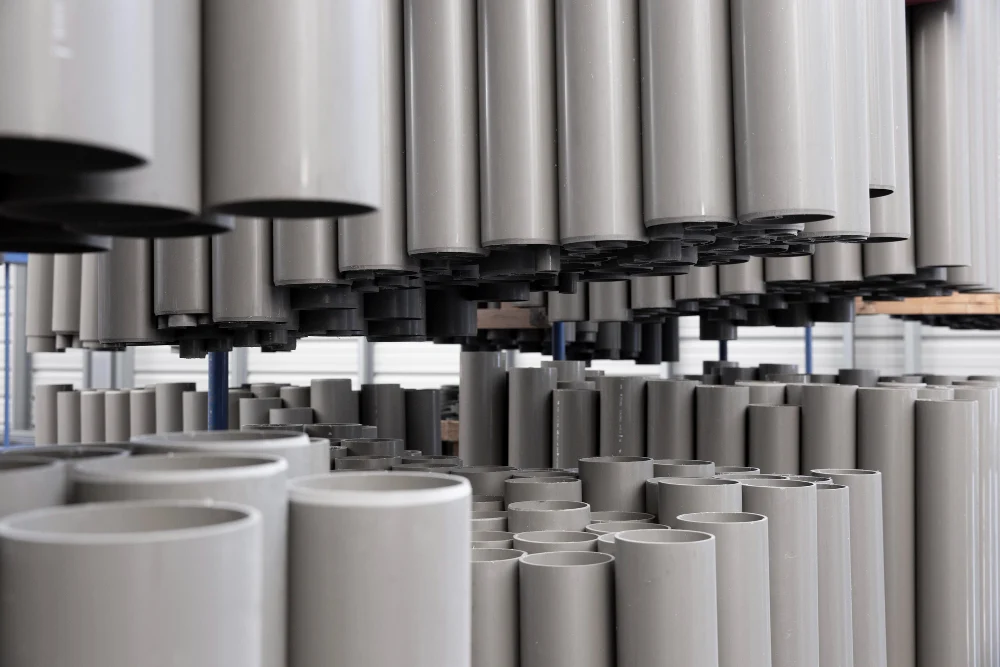
Enter industrial grade grey UPVC (Unplasticised Polyvinyl Chloride). Over the past decade, this material has quietly revolutionized industrial infrastructure. From chemical processing plants to water treatment facilities, from electrical conduits to agricultural irrigation, grey UPVC is outperforming traditional materials across the board.
But what makes this unassuming grey plastic so superior? Here are five compelling reasons why industrial grade grey UPVC is rapidly becoming the material of choice for engineers, specifiers, and facility managers worldwide.
1Superior Chemical Resistance – The Corrosion Problem Solved
The Traditional Material Problem
Metal pipes—whether cast iron, galvanized steel, or copper—share a common vulnerability: corrosion. In industrial environments, this isn't just an inconvenience; it's a costly, ongoing battle.
- Rust and oxidation weaken structural integrity over time
- Chemical reactions with industrial fluids cause pitting and leaks
- Galvanic corrosion occurs when dissimilar metals contact each other
- Scaling and encrustation reduce flow efficiency and eventually block pipes
The result? Frequent repairs, unplanned downtime, and ultimately, complete system replacement.
How Grey UPVC Solves It
Industrial grade grey UPVC is inherently corrosion-resistant. Unlike metal, it does not rust, corrode, or degrade when exposed to most industrial chemicals. Its unplasticised formulation—containing no plasticisers—makes it rigid, strong, and highly resistant to environmental and chemical influences.
The chemical resistance profile of grey UPVC is exceptional:
| Chemical Class | Resistance |
|---|---|
| Dilute acids | Excellent |
| Concentrated acids (most) | Good |
| Alkalis and caustic solutions | Excellent |
| Salt solutions and brines | Excellent |
| Alcohols | Good |
| Oils and greases | Good |
| Domestic effluents | Excellent |
The Result: Unlike metal piping systems that degrade over time due to corrosion, grey UPVC maintains its integrity for decades. As one industry source notes, "UPVC does not corrode, rust, or scale the way metal piping can, making it a preferred material across many industries seeking long term reliability with reduced maintenance demands."
This corrosion resistance is why grey UPVC has become indispensable for chemical processing, sewage systems, and industrial fluid handling.
2Exceptional Durability and Long Service Life
The Traditional Material Problem
Traditional materials have predictable failure modes:
- Cast iron rusts from the inside out, eventually cracking
- Steel corrodes at joints and weld points
- Copper suffers from pitting and electrolytic corrosion
- Concrete cracks and degrades over time
These materials typically require replacement every 15–25 years in industrial environments, depending on conditions.
How Grey UPVC Solves It
Industrial grade grey UPVC is engineered for longevity. The material's resistance to corrosion, chemicals, and environmental stress translates into a service life that exceeds 50 years under normal conditions.
Key durability factors:
UV Stabilisation: The grey colour comes from carbon black, which provides superior UV resistance. This ensures the material maintains its structural integrity even in outdoor installations.
Impact Resistance: Industrial grade formulations include impact modifiers that significantly improve toughness and resistance to crack growth. This is particularly important in environments where pipes and profiles may be subjected to mechanical stress.
Weather Resistance: Grey UPVC withstands extremes of heat, cold, wind, and rain without corroding, peeling, or degrading.
Chemical Stability: The material remains chemically inert, resisting attack from most substances encountered in industrial environments.
The Result: A service life of 50+ years for properly installed grey UPVC systems. As one manufacturer states, UPVC / CPVC is unaffected by most concentrations of acids" and offers a "life span of over 50 years, if laid & buried below the ground as per prescribed standards."
This longevity means fewer replacements, less waste, and significantly lower total cost of ownership.
3Lightweight Design – Dramatic Cost Savings
The Traditional Material Problem
Traditional materials are heavy—very heavy. Consider these comparisons:
| Material | Relative Weight (vs. UPVC) |
|---|---|
| UPVC | 1x (baseline) |
| Aluminium | ~2x |
| Steel | ~6x |
| Cast Iron | ~6x |
This weight creates multiple problems:
- Higher transportation costs – more fuel, more trips
- More expensive handling – requires cranes, lifting equipment, and larger crews
- Slower installation – heavy sections take longer to position and join
- Higher structural requirements – supports and foundations must be stronger
How Grey UPVC Solves It
Grey UPVC has a density of approximately 1.43 g/cm³, making it approximately one-sixth the weight of cast iron and steel.
The practical benefits are substantial:
1. Lower Transportation Costs
Because UPVC is so light, more material can be transported per load. Less fuel is consumed, and fewer emissions are generated during transportation.
2. Easier Handling and Installation
UPVC pipes and profiles can be handled manually without heavy lifting equipment. This reduces the need for cranes, forklifts, and specialized crews.
3. Faster Installation
Astral Pipes reports that "Astral uPVC pipes can be installed with at least a 25% speed advantage as compared to metal piping systems." This translates directly into labour cost savings.
4. Reduced Installation Costs
Industry sources indicate that UPVC can reduce installation effort and material costs by up to 30% compared to metal alternatives.
The Result: "Because of its lower Density (Approx 1.43 g/cm3) its weight is 1/6th of the cast iron & steel, which makes it cheaper to transport and easy to install." These savings compound across large-scale industrial projects.
Cut Installation Costs by 30% with Grey UPVC
1/6th the weight of steel · 25% faster to install · Zero corrosion maintenance.
- ✓ Lower logistics & handling
- ✓ No heavy lifting equipment
- ✓ 50+ year service life
- ✓ Minimal long-term upkeep
4Minimal Maintenance – The "Fit and Forget" Advantage
The Traditional Material Problem
Traditional materials are maintenance-intensive:
- Metal pipes require regular inspections for corrosion, pitting, and leaks
- Anti-corrosion coatings must be periodically reapplied
- Scaling and deposits reduce flow and require cleaning
- Joint failures occur due to corrosion at connection points
- Repairs often require system shutdowns, causing production losses
All of this translates into ongoing operational costs that far exceed the initial material investment.
How Grey UPVC Solves It
Grey UPVC is essentially maintenance-free. Once installed, it requires virtually no upkeep:
No Corrosion Treatment: Unlike metal, UPVC never needs painting, rust-proofing, or anti-corrosion treatment.
Smooth Inner Surface: The mirror-smooth bore of UPVC pipes prevents scaling, deposit build-up, and biological growth. This maintains optimal flow efficiency throughout the system's life.
No Joint Degradation: Solvent-welded joints create a permanent, leak-proof seal that doesn't degrade over time.
No Galvanic Corrosion: As a non-metallic material, UPVC is immune to the electrolytic corrosion that plagues mixed-metal systems.
Reduced Inspection Requirements: Because UPVC doesn't corrode or degrade, routine inspections can be less frequent and less intensive.
The Result: "Maintenance-free operation is one of the biggest advantages of choosing [UPVC]. Unlike conventional systems prone to rusting, pitting, and galvanic corrosion, our UPVC pipes and fittings require virtually no upkeep."
One source notes that metal pipes "often require anti-corrosion coatings, regular inspections, and potential repairs, adding to long-term expenses." With grey UPVC, these costs are eliminated entirely.
5Safety and Environmental Benefits – Lead-Free, Flame-Retardant, and Sustainable
The Traditional Material Problem
Traditional materials pose several safety and environmental concerns:
- Lead-based stabilizers in older plastic formulations posed health risks
- Metal pipes can leach heavy metals into water
- Corrosion releases iron and other particles into fluid streams
- Fire safety – many materials contribute to flame spread
- Environmental impact – mining and processing metals is energy-intensive
How Grey UPVC Solves It
Modern industrial grade grey UPVC addresses all these concerns:
Lead-Free Formulation
Today's industrial grade grey UPVC is manufactured 100% lead-free using calcium-zinc stabilizers instead of heavy metals. This makes it:
- Safe for potable water systems
- Non-toxic and environmentally safe
- Suitable for food processing and pharmaceutical applications
- Free from heavy metals that could leach into the environment
"Lead-free matters because it supports both health and environmental safety. Profiles manufactured without harmful heavy metals help create safer indoor environments for families, workers, and occupants."
Inherent Flame Retardance
UPVC is naturally flame retardant due to the high chlorine content in its polymer structure:
- Self-extinguishing: When the flame source is removed, UPVC stops burning immediately
- Limited flame spread: Burning UPVC chars and will self-extinguish
- Does not support combustion: UPVC does not promote fire development
- Fire retardant rating: Meets standards like DIN 4102
"Fire tests have shown that UPVC materials, being naturally flame retardant throughout their product life... do not support combustion and are in fact self-extinguishing. This quality prevents the promotion of fire spread."
This inherent fire safety is particularly valuable in industrial settings where fire risks are elevated.
Environmental Sustainability
Grey UPVC offers several environmental advantages:
- Fully recyclable – UPVC scrap can be collected and recycled back into production
- Closed-loop potential – leading manufacturers collect and recycle all fabrication scrap
- Lower embodied energy – manufacturing UPVC requires significantly less energy than producing metals
- Reduced deforestation – UPVC profiles have slowed the rate of forest cutting for timber alternatives
"uPVC profiles are environmental friendly as they can be fully recycled and reused for the production of uPVC profiles."
Head-to-Head: Grey UPVC vs. Traditional Materials
| Attribute | Grey UPVC | GI/Steel | Cast Iron | Copper | Concrete |
|---|---|---|---|---|---|
| Corrosion Resistance | Excellent | Poor | Poor | Moderate | Good |
| Chemical Resistance | Excellent | Poor | Poor | Moderate | Good |
| Weight | Very Light | Heavy | Very Heavy | Heavy | Very Heavy |
| Installation Speed | Fast | Slow | Very Slow | Moderate | Slow |
| Maintenance Required | Minimal | High | High | Moderate | Moderate |
| Service Life | 50+ years | 15–25 years | 20–30 years | 25–40 years | 30–50 years |
| Fire Safety | Self-extinguishing | Non-combustible | Non-combustible | Non-combustible | Non-combustible |
| Lead-Free | Yes | N/A | N/A | N/A | N/A |
| Recyclable | Yes | Yes | Yes | Yes | Limited |
| Total Cost of Ownership | Lowest | High | High | Moderate-High | Moderate |
Real-World Applications Where Grey UPVC Excels
Chemical Processing Plants
The exceptional chemical resistance of grey UPVC makes it ideal for conveying acids, alkalis, and corrosive fluids that would destroy metal pipes within months.
Water Treatment Facilities
Grey UPVC's corrosion resistance and smooth bore prevent scaling and maintain water quality. Its lead-free formulation ensures safe drinking water.
Electrical Conduits
The high dielectric strength and self-extinguishing properties make grey UPVC the standard for electrical cable protection in industrial and outdoor installations.
Agricultural Irrigation
Lightweight, durable, and corrosion-resistant, grey UPVC pipes are ideal for borewells and irrigation systems.
Industrial Sheets and Profiles
Grey UPVC sheets are used for tank building, machine guards, chemical ductwork, and protective barriers—applications where corrosion resistance and structural integrity are paramount.
Future-Proof Your Plant with Grey UPVC
Replace rusting metal & concrete. Fire-retardant, lead-free, and built for 5 decades of industrial abuse.
- ✓ Self-extinguishing (UL94 V0 & LOI 42%)
- ✓ Zero corrosion – no rust, no pitting
- ✓ Withstands acids, alkalis & salts
- ✓ 100% lead-free & recyclable
Conclusion
Industrial grade grey UPVC is not merely an alternative to traditional materials—it is a superior solution that addresses the fundamental limitations of metals, concrete, and other conventional options.
The Five Reasons Summarized:
- Superior Chemical Resistance – No rust, no corrosion, no degradation from industrial chemicals
- Exceptional Durability – 50+ year service life with minimal degradation
- Lightweight Design – One-sixth the weight of steel, reducing transportation and installation costs by up to 30%
- Minimal Maintenance – No painting, no rust-proofing, no regular inspections—truly "fit and forget"
- Safety and Environmental Benefits – Lead-free, self-extinguishing, and fully recyclable
When you factor in initial cost, installation speed, maintenance requirements, service life, and safety, industrial grade grey UPVC delivers the lowest total cost of ownership of any material available for industrial applications.
The grey colour is not just aesthetic—it signifies carbon black stabilization for UV resistance, marking the material as truly industrial-grade. For any application where reliability, durability, and cost-effectiveness matter, grey UPVC is the clear choice.