
Industrial Water Treatment Membranes – RO, UF & NF Solutions
Superior salt rejection, low energy consumption, and exceptional durability for industrial, commercial, and municipal applications.
Our Product Range
HYDRAMEM membranes engineered for performance, reliability and long operational life
📄 Download HYDRAMEM Product Brochure
Get complete technical specifications, model numbers, flow rates, and application guides for all RO, NF & UF membrane series.
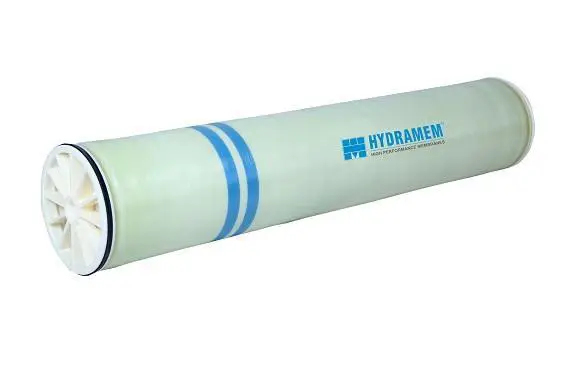
Reverse Osmosis (RO)
Reverse Osmosis Solutions
High-performance RO membranes delivering up to 99.7% salt rejection across brackish, seawater and low-energy applications.
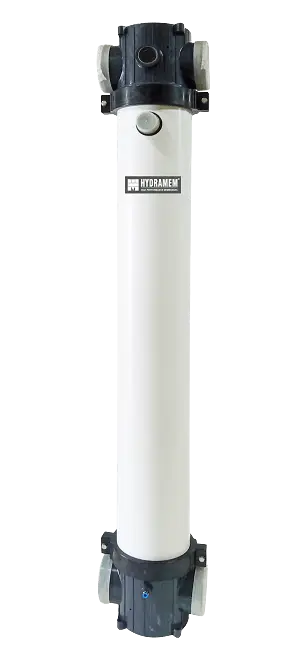
Ultra Filtration (UF)
Ultra Filtration Solutions
Hollow fiber PES/PVDF membranes for removal of colloids, suspended solids, bacteria and viruses.
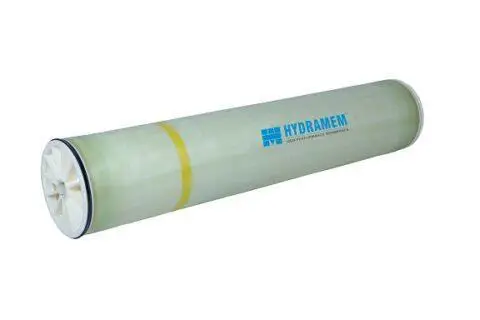
Nano Filtration (NF)
Nano Filtration Solutions
Selective separation for divalent ion removal, water softening, dye desalting and brine recycling.
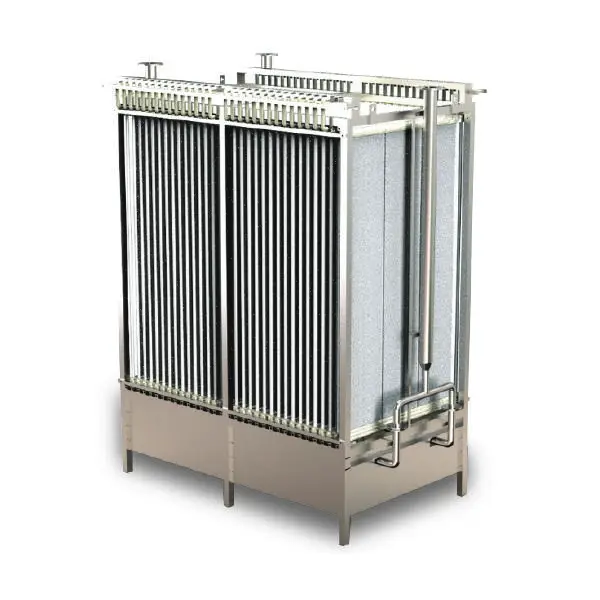
Membrane Bio Reactor (MBR)
Wastewater Treatment Solutions
Advanced MBR modules for compact, high-quality biological wastewater treatment and water reuse.
Industrial Membrane Technical Comparison
| Membrane Type | Filtration Range | Salt / Ion Rejection | Operating Pressure | Primary Applications | Key Advantage |
|---|---|---|---|---|---|
| RO (Reverse Osmosis) | < 0.001 µm | 99.3% – 99.7% | 7 – 70 bar | Desalination, process water, ZLD, boiler feed | Highest rejection of dissolved salts & ions |
| NF (Nanofiltration) | 0.001 – 0.01 µm | Divalent: 85–98% Monovalent: Low |
3 – 20 bar | Water softening, dye desalting, brine recycling | Selective removal — lower energy than RO |
| UF (Ultrafiltration) | 0.01 – 0.1 µm | Removes colloids, bacteria, viruses | 0.5 – 5 bar | RO pretreatment, surface water, MBR systems | Removes pathogens without chemicals |
| MBR (Membrane Bio-Reactor) | 0.01 – 0.4 µm | Suspended solids: >99% | Vacuum / low pressure | Biological wastewater treatment & reuse | Compact design, high-quality effluent |
Types of Industrial Water Treatment Membranes
Each membrane technology solves a different water treatment challenge. Understanding the differences helps engineers select the optimal solution for their application.
Reverse Osmosis (RO) Membranes
Salt Rejection: Up to 99.7%Reverse Osmosis membranes are the most widely used membrane technology for industrial water treatment. They operate by applying hydraulic pressure greater than the osmotic pressure of the feed water, forcing water molecules through an extremely dense semi-permeable membrane while rejecting dissolved salts, ions, organics, bacteria, and virtually all contaminants larger than 0.001 microns.
HYDRAMEM industrial RO membranes are manufactured from Cross Linked Fully Aromatic Polyamide thin film composite technology at India's first state-of-the-art membrane facility in Verna, Goa. They are available in four categories: Low Pressure (LPE) for low TDS groundwater, Brackish Water (BWE) for high-TDS industrial feed water achieving 99.7% salt rejection, Fouling Resistant (FRE) for challenging organic-loaded feed waters, and Seawater (SWE) for coastal desalination plants requiring operation at 55–70 bar.
Operating pressure ranges from 7 bar for low-energy applications up to 70 bar for seawater desalination. Recovery rates of 75–80% are standard for industrial systems, while staged ZLD designs push recovery to 90%+. HYDRAMEM RO membranes are available in standard 4×40 and 8×40 inch element sizes, compatible with all major pressure vessel manufacturers. Typical membrane life is 3–5 years under correct operating conditions with periodic CIP cleaning.
View Full RO Membrane Range →Key Specifications
- Filtration range: < 0.001 µm
- Salt rejection: 99.3% – 99.7%
- Operating pressure: 7 – 70 bar
- Recovery rate: 75 – 80% (standard)
- Element sizes: 4×40 in & 8×40 in
- Membrane material: Thin film composite polyamide
- Certification: ISO 9001
Primary Applications
- Industrial process water
- Boiler feed water treatment
- Pharmaceutical grade water
- Seawater desalination
- ZLD systems (final RO stage)
- Brackish groundwater treatment
Ultrafiltration (UF) Membranes
MWCO: 100,000 Daltons | SDI < 3Ultrafiltration membranes operate at a filtration range of 0.01–0.1 microns, effectively removing suspended solids, colloids, bacteria, viruses, and macromolecules from feed water. Unlike RO membranes, UF membranes do not remove dissolved salts — they are primarily used as a pretreatment stage before RO systems, or for direct filtration where biological contamination removal is the primary goal.
HYDRAMEM UF modules are hollow fiber membranes available in two material types: Modified PES (Polyethersulfone) with an In-to-Out flow configuration, and PVDF (Polyvinylidene Fluoride) with an Out-to-In flow configuration. The PVDF i-flo variant offers enhanced performance for high-turbidity feed waters such as surface water and seawater pretreatment. All variants deliver a consistent permeate SDI below 3, which is the standard requirement for RO membrane protection.
UF membranes operate at significantly lower pressures than RO (0.5–5 bar), resulting in lower energy consumption. Their hollow fiber configuration allows for efficient backwashing, which is the primary cleaning method to restore flux after fouling. HYDRAMEM UF modules have a Molecular Weight Cut-Off (MWCO) of 100,000 Daltons and are ISO 9001 certified. They are available in sizes from 60mm to 80mm diameter modules.
View Full UF Membrane Range →Key Specifications
- Filtration range: 0.01 – 0.1 µm
- MWCO: 100,000 Daltons
- Permeate SDI: < 3
- Operating pressure: 0.5 – 5 bar
- Materials: Modified PES & PVDF
- Flow config: In-to-Out / Out-to-In
- Certification: ISO 9001
Primary Applications
- RO pretreatment (SDI reduction)
- Surface & brackish water treatment
- Seawater pretreatment
- MBR system integration
- Municipal drinking water
- Industrial effluent polishing
Nanofiltration (NF) Membranes
Bivalent Ion Rejection: 96% – 98%Nanofiltration membranes occupy the performance range between RO and UF, operating at a filtration range of 0.001–0.01 microns. What makes NF membranes uniquely valuable is their selective ion rejection: they effectively reject divalent ions such as calcium (Ca²⁺), magnesium (Mg²⁺), sulphate (SO₄²⁻), and bivalent heavy metals, while allowing monovalent ions like sodium (Na⁺) and chloride (Cl⁻) to pass through. This selectivity makes them far more energy-efficient than RO for applications that do not require full desalination.
HYDRAMEM NF elements are manufactured from Cross Linked Fully Aromatic Polyamide thin film composite material with a hard outer shell for robust industrial performance. They are available in two rejection grades: NFE 9620 with 96% bivalent ion rejection and NFE 9840 with 98% bivalent ion rejection, each available in 4×40 and 8×40 inch element sizes. The hard outer shell is a significant advantage in industrial environments where handling conditions are demanding and chemical exposure is routine.
NF membranes operate at 3–20 bar, substantially lower pressure than RO, resulting in significantly lower energy costs. They are widely used in textile dye desalting and brine recycling, water softening for removal of hardness ions, dairy concentration and fractionation, pharmaceutical process water separation, and as an intermediate stage in ZLD systems. Their high pH stability (typically 2–11) and temperature tolerance make them reliable in demanding chemical processing environments.
View Full NF Membrane Range →Key Specifications
- Filtration range: 0.001 – 0.01 µm
- Bivalent rejection: 96% – 98%
- Monovalent rejection: Low (selective)
- Operating pressure: 3 – 20 bar
- Element sizes: 4×40 in & 8×40 in
- Outer shell: Hard industrial shell
- Certification: ISO 9001
Primary Applications
- Textile dye desalting & brine recovery
- Water softening (hardness removal)
- Dairy concentration & fractionation
- Pharmaceutical separation
- ZLD intermediate concentration
- Chemical process water treatment
Membrane Bio Reactor (MBR) Membranes
Suspended Solids Removal: >99%Membrane Bio Reactor (MBR) technology combines conventional biological wastewater treatment with membrane filtration in a single integrated process. In an MBR system, submerged hollow fiber membranes replace the secondary clarifier used in conventional activated sludge processes, resulting in a compact, high-performance wastewater treatment system that produces consistently superior effluent quality suitable for direct reuse.
HYDRAMEM MBR modules are Hollow Fiber PVDF (Reinforced) submerged membranes with an Outside-In flow configuration. PVDF (Polyvinylidene Fluoride) is the preferred material for MBR applications due to its superior chemical resistance, mechanical strength, and tolerance to the cyclic aeration and backwash conditions in biological treatment systems. The reinforced construction ensures membrane integrity even after years of continuous operation in the harsh biological environment of an activated sludge tank.
The key advantages of HYDRAMEM MBR systems include a physical footprint reduction of up to 50–70% compared to conventional STP, pathogen-free effluent (no bacteria or viruses in permeate), elimination of separate tertiary filtration steps, and effluent quality that meets reuse standards for toilet flushing, garden irrigation, industrial cooling, and process water applications. MBR is now the preferred technology for hospitals, IT parks, commercial complexes, pharmaceutical plants, food processing facilities, and municipal sewage treatment plants where space is constrained and high effluent quality is mandatory.
View Full MBR Membrane Range →Key Specifications
- Filtration range: 0.01 – 0.4 µm
- SS removal: >99%
- Operating mode: Vacuum / low pressure
- Material: Hollow Fiber PVDF (Reinforced)
- Configuration: Outside-In (submerged)
- Footprint saving: 50–70% vs. conventional
- Certification: ISO 9001
Primary Applications
- Hospital & healthcare STP
- IT park & commercial complex STP
- Industrial ETP wastewater reuse
- Pharmaceutical plant effluent
- Food & beverage processing STP
- Municipal sewage treatment
How to Select the Right Industrial Water Treatment Membrane
Choosing the correct membrane is critical to system efficiency, operating cost, and membrane lifespan. Use this guide to match your requirements.
Feed Water TDS & Composition
The starting point for any membrane selection. If your feed water TDS is above 2,000 mg/L, RO membranes are required. For TDS between 500–2,000 mg/L with specific ion removal needs (sulphates, hardness), NF membranes may be more energy-efficient. For turbid surface water or municipal supply with suspended solids, UF is the correct first stage.
- TDS > 2,000 mg/L: RO membranes (BWE or SW series)
- TDS 500–2,000 mg/L, divalent removal: NF membranes
- Turbidity / suspended solids: UF pretreatment
- Biological wastewater: MBR system
Required Salt Rejection & Water Quality
Define the output water quality required for your process. Pharmaceutical-grade water and boiler feed water demand the highest rejection. Textile process water may need NF for colour removal and dye desalting. Municipal drinking water requires pathogen removal where UF combined with RO is standard.
- Pharma / boiler feed: High-rejection RO (99.7%)
- Food & beverage: RO + UF combination
- Textile dye desalting: NF membranes
- Pathogen removal only: UF membranes
Operating Pressure & Energy Consumption
Operating pressure directly impacts your energy (OPEX) costs. RO systems for seawater require 55–70 bar; brackish water RO operates at 10–20 bar. HYDRAMEM Low Energy (LE) series membranes are specifically designed to achieve target rejection at lower operating pressure, reducing long-term energy costs significantly.
- Seawater desalination: SW series (high pressure)
- Brackish / bore well water: BWE or LE series
- Low-energy target: HYDRAMEM LE series
- Use SMART RO software to optimize flux and recovery
Fouling Tendency & Pretreatment
Industrial feed waters with high organic load, SDI > 5, or biological contamination require either extensive pretreatment or fouling-resistant membranes. HYDRAMEM Fouling Resistant membranes feature advanced surface chemistry that resists biofouling and organic scaling, reducing CIP frequency and extending membrane life in challenging industrial applications such as textile and food processing effluents.
- High organic / SDI > 5: Fouling Resistant membranes
- Textile / food effluent: FR series + proper antiscalants
- Municipal / clean bore well: Standard RO or NF series
- Always dose Indion antiscalants for scale prevention
Recovery Rate & ZLD Requirements
Recovery rate — the percentage of feed water recovered as permeate — impacts both water efficiency and concentrate disposal. Standard RO systems achieve 75–80% recovery. ZLD (Zero Liquid Discharge) systems, mandatory for many Indian industries, require staged RO systems pushing 90–95% recovery, followed by evaporation and crystallization. Membrane selection for ZLD must account for the high-TDS brine conditions in the final stages.
- Standard industrial: 75–80% recovery, RO
- Water-scarce / ZLD mandate: Staged RO + NF
- High-recovery final stage: High-rejection RO
- SMART software calculates optimal recovery for your system
CIP Compatibility & Cleaning Frequency
Ensure the selected membrane is compatible with the cleaning chemicals required for your specific foulants. HYDRAMEM membranes are compatible with standard CIP chemicals including citric acid, HCl, NaOH, and SDS-based cleaners. For aggressive feed waters requiring frequent cleaning, Fouling Resistant series membranes offer significantly lower cleaning frequency and longer service intervals, reducing maintenance costs.
- Verify pH tolerance range for your cleaning regime
- Use Indion antiscalants to reduce cleaning frequency
- High-fouling applications: FR series reduces CIP cycles
- Global Elementum provides membrane failure analysis support
Not sure which membrane fits your application? Our water treatment engineers will analyse your feed water data and recommend the optimal solution — free of charge.
Get Free Membrane Selection Advice 💬 WhatsApp Our EngineerWhy HYDRAMEM Membranes?
High Salt Rejection
99.3% to 99.7% salt rejection across all membrane types for superior water quality and consistent performance.
Low Energy Consumption
Optimized membrane design reduces operating pressure and energy costs, improving overall system efficiency.
Extended Membrane Life
Advanced chemistry and robust construction ensure longer operational life and reduced replacement frequency.
Consistent Performance
Manufactured in India's first state-of-the-art facility with rigorous quality assurance processes.
Industrial & Municipal Ready
Proven performance across diverse applications from large-scale industrial plants to municipal water systems.
Global Standards
Products manufactured to international standards and available globally through authorized distributors.
Industrial Applications of Water Treatment Membranes
HYDRAMEM membranes are engineered for demanding industrial environments across every major sector. Each industry presents unique water chemistry challenges — here is how membrane technology addresses them.
Textile & Dyeing Industry Membranes
The textile and dyeing industry is one of the largest industrial consumers of water and generates some of the most challenging wastewater in Indian manufacturing. Textile effluent contains high concentrations of reactive dyes, sodium chloride (from the dyeing bath), sulphates, COD, and colour — making it difficult and expensive to treat with conventional methods.
Membrane technology provides the most efficient solution for textile wastewater management and water reuse. Nanofiltration (NF) membranes are particularly valuable in textile applications because of their selective rejection capability: they retain dye molecules and divalent ions while allowing monovalent sodium chloride to pass through into the permeate. This dye desalting process allows textile plants to concentrate and recover reactive dyes while simultaneously producing salt-containing permeate that can be recycled back into the dyeing process — a significant cost saving in an industry that uses hundreds of tonnes of sodium chloride annually.
For the wastewater treatment stage, Ultrafiltration (UF) membranes serve as efficient pretreatment to remove colloids and suspended solids before RO concentration. Fouling Resistant RO membranes are the preferred choice for final concentration and ZLD systems in textile plants, as their advanced surface chemistry resists organic fouling from dye compounds and surfactants, significantly reducing CIP cleaning frequency. HYDRAMEM FRE series membranes are specifically designed for these high-fouling applications.
Pharmaceutical & Chemical Industry Membranes
The pharmaceutical industry demands the highest water purity standards for drug manufacturing, equipment cleaning, and process water. Purified Water (PW) and Water for Injection (WFI) standards require the removal of dissolved ions, organics, endotoxins, bacteria, and pyrogens to extremely low levels. Membrane technology, particularly high-rejection Reverse Osmosis, is the backbone of pharmaceutical water purification systems globally.
High-rejection RO membranes (HYDRAMEM BWE series with 99.7% salt rejection) are the standard choice for the first stage of pharmaceutical water purification. They provide consistent conductivity reduction, ion removal, and organic rejection — reducing the load on downstream polishing steps such as electrodeionization (EDI) or mixed bed deionizers. The consistent, reproducible performance of HYDRAMEM RO membranes simplifies validation of pharmaceutical water systems under GMP requirements.
For chemical process water, NF membranes are used for selective removal of specific ionic contaminants while maintaining process-compatible water chemistry. UF membranes serve as pretreatment in high-purity systems and are used directly for biological product clarification and concentration. The wide chemical compatibility of HYDRAMEM membranes — tolerating pH 2–11 for NF elements — makes them suitable for aggressive cleaning and sanitization protocols common in regulated pharmaceutical environments.
Food & Beverage Industry Membranes
The food and beverage industry uses membrane filtration across a wide range of applications — from ingredient water purification and process water recycling to product concentration, fractionation, and wastewater treatment. Regulatory requirements for food safety make consistent, validated membrane performance essential, and HYDRAMEM membranes are manufactured under ISO 9001 certified processes that provide the traceability and quality assurance the food industry requires.
In food and beverage plants, RO membranes are used for ingredient water purification — removing TDS, chlorine, and organic contaminants to produce consistent water quality that does not affect product taste, colour, or stability. For dairy applications, NF membranes are used for whey concentration and lactose separation, where their selective permeation allows proteins and lactose to be concentrated while removing monovalent mineral salts. This reduces evaporation costs significantly in dairy powder production.
For food processing wastewater — which typically contains high BOD, fats, oils, and suspended solids — MBR systems combining biological treatment with UF membranes produce reuse-ready effluent that can be returned to non-contact process applications, significantly reducing freshwater consumption. Beverage plants with high water usage (breweries, soft drink manufacturers, bottled water plants) achieve substantial water savings through membrane-based recycling systems using HYDRAMEM UF and RO combinations.
Boiler Feed Water & Power Generation Membranes
Boiler feed water is one of the most demanding water quality applications in industrial water treatment. High-pressure boilers require demineralized water with extremely low TDS and conductivity to prevent scale formation, corrosion, and carryover into steam — all of which cause costly equipment damage and unplanned shutdowns. Membrane technology has become the preferred primary demineralization step for boiler feed water systems across power plants, process industries, and manufacturing facilities.
High-rejection RO membranes (HYDRAMEM BWE 9940 series achieving 99.7% salt rejection) are used as the primary demineralization stage, removing the bulk of dissolved salts, silica, hardness, and organics from feed water before the final polishing step. The SMART RO design software provided by Global Elementum allows precise calculation of membrane flux, recovery, and concentrate composition — ensuring the RO system is optimized for minimum scaling risk and maximum recovery while protecting boiler integrity.
For power generation applications specifically, where feed water volumes are large and operating cost sensitivity is high, HYDRAMEM Low Pressure (LE/LPE) series membranes offer significant energy savings compared to standard RO elements. These membranes achieve target rejection at lower operating pressure, directly reducing electricity consumption per cubic meter of purified water produced. Combined with Indion antiscalant dosing, they provide reliable long-term performance with reduced CIP frequency.
Desalination Membranes for Industrial Plants
India's coastal industrial corridor — from Tamil Nadu and Andhra Pradesh to Gujarat and Maharashtra — is home to thousands of industrial facilities that depend on seawater desalination or brackish water treatment to supplement freshwater supplies. As groundwater TDS levels rise and freshwater scarcity intensifies, membrane-based desalination has become an operational necessity for water-intensive industries.
For seawater desalination, HYDRAMEM SWE (Seawater) series RO membranes are specifically engineered for high-pressure, high-salinity operation at 55–70 bar with TDS rejection exceeding 99.5%. The HM 4040 SWE 9999 and HM 8040 SWE 9999 elements are the HYDRAMEM products of choice for coastal desalination plants supplying industrial process water, cooling tower makeup, and potable water to industrial townships.
For brackish water treatment — groundwater or blended water with TDS of 2,000–10,000 mg/L — HYDRAMEM BWE (Brackish Water) series membranes operating at 10–20 bar provide 99.3–99.7% salt rejection at significantly lower energy cost than seawater RO. UF pretreatment is strongly recommended for coastal and surface water sources with variable turbidity and biological content, ensuring the RO membranes are protected from colloidal fouling and biofouling. HYDRAMEM UF modules delivering SDI < 3 are the standard pretreatment choice for industrial desalination systems.
Zero Liquid Discharge (ZLD) Membrane Systems
Zero Liquid Discharge (ZLD) is a water management approach where industrial facilities recover and recycle all process water, discharging zero liquid effluent into the environment. In India, ZLD is mandatory for textile, pharmaceutical, tannery, and electroplating industries under CPCB regulations, and is increasingly required for all high-water-usage industries in water-stressed regions. Membrane technology is the most critical component of any ZLD system — enabling maximum water recovery before the expensive evaporation and crystallization stages.
A typical ZLD membrane system uses a multi-stage configuration. The first stage uses UF membranes to remove suspended solids and colloids from the raw industrial effluent, protecting downstream RO membranes. The second stage uses standard RO membranes to achieve 70–80% water recovery from the clarified effluent. The third stage — often called secondary RO or BWRO concentration — pushes recovery to 90–95% using high-rejection RO membranes (HYDRAMEM BWE 9940 or FR series) that can tolerate the elevated TDS of the concentrate stream. The remaining highly concentrated brine then goes to the evaporator, dramatically reducing the evaporation load and energy cost.
In textile ZLD systems specifically, HYDRAMEM Fouling Resistant (FR) series membranes are preferred for the secondary concentration stage due to their resistance to the organic dye compounds and surfactants present in textile concentrate streams. Proper antiscalant dosing with Indion chemicals is essential throughout the ZLD membrane train to prevent scaling from calcium, silica, and barium sulphate at high recovery ratios. Global Elementum provides complete ZLD membrane system design using SMART RO software, membrane selection, antiscalant specification, and AMC support.
Why Choose GLOBAL ELEMENTUM ENTERPRISES LLP?
- Genuine HYDRAMEM Products – Authorized Dealer of HYDRAMEM (Ion Exchange India Ltd.) with authentic, quality-assured membranes
- Expert Technical Support – Membrane selection guidance and system optimization
- Fast Delivery – Reliable supply chain with quick turnaround times
- AMC & Servicing – Comprehensive Annual Maintenance Contracts and support
- Cleaning Chemicals – Proprietary Indion antiscalants and membrane cleaners
- Failure Analysis – In-house complete failure analysis and membrane autopsy
- Design Support – SMART RO & UF software for efficient system design
- 40+ Years Legacy – Backed by Ion Exchange's pioneering water treatment expertise
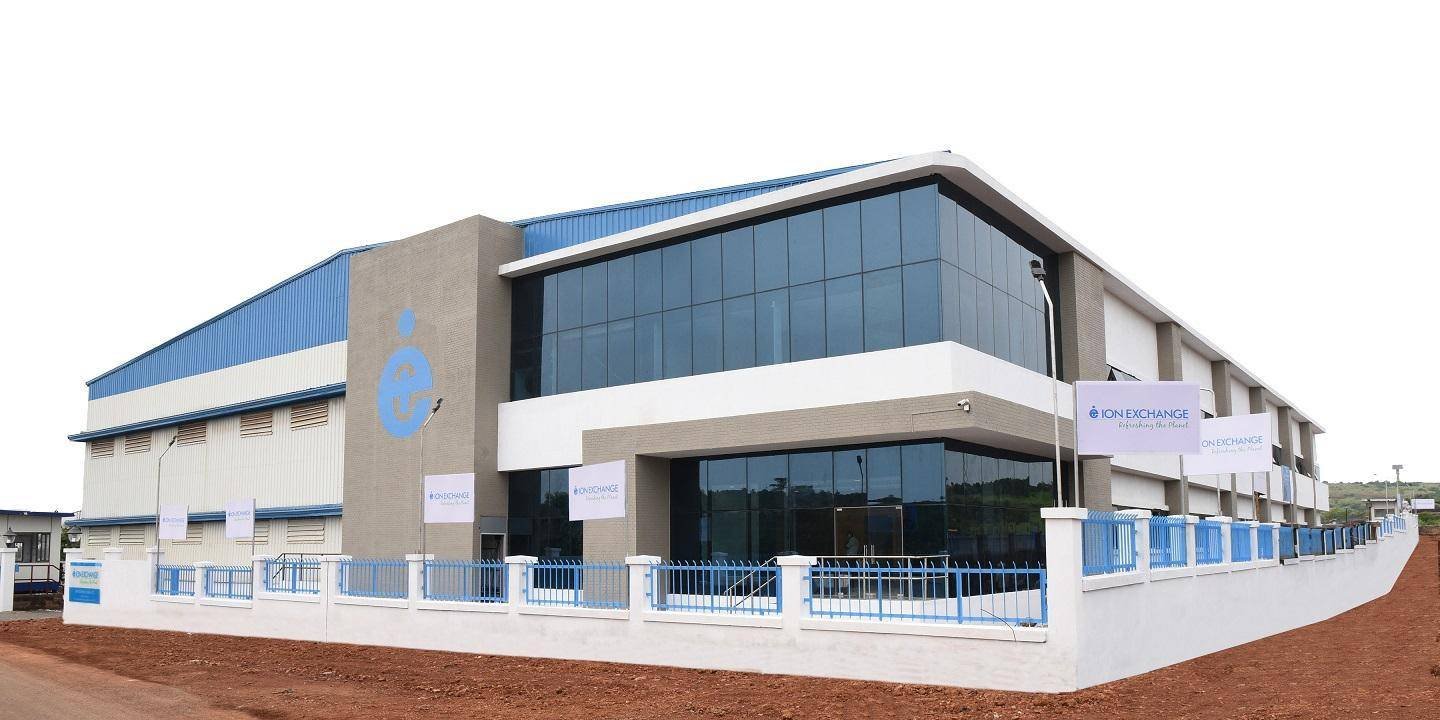
Ion Exchange India
Pioneer of Water Treatment in India
Manufacturing membranes since 1980 • First to introduce RO in India • State-of-the-art facility in Verna, Goa • Trusted globally by thousands of installations
Value Added Services
🔬 Failure Analysis
In-house complete failure analysis to determine root causes and implement corrective actions. Includes membrane autopsy when required for detailed diagnostics.
🛠️ Operation & Maintenance
Comprehensive Annual Maintenance Contracts (AMC), plant audits, and real-time performance monitoring to ensure optimal system efficiency.
💊 Cleaning Chemicals
Proprietary Indion antiscalants and membrane cleaners designed to inhibit scale formation and enhance membrane performance and longevity.
📐 Design Support
SMART RO & UF software for efficient system design and optimization. Expert consultation for all your water treatment requirements.
Frequently Asked Questions
Get in Touch
Ready to find the right membrane solution for your application? Our water treatment specialists are here to help with product selection, system design, and technical support.
Request Expert Recommendation
Fill in your details and we'll respond within 24 hours with a customized solution.